The exploration of literature, publishing, and the ideas behind the page. Through analysis, reporting, and cultural commentary, highlighting books and authors—past and present—and examining how stories reflect society, challenge power, and shape understanding.
Focused on thoughtful, accessible literary conversation, this space is for readers who believe stories matter beyond the page.
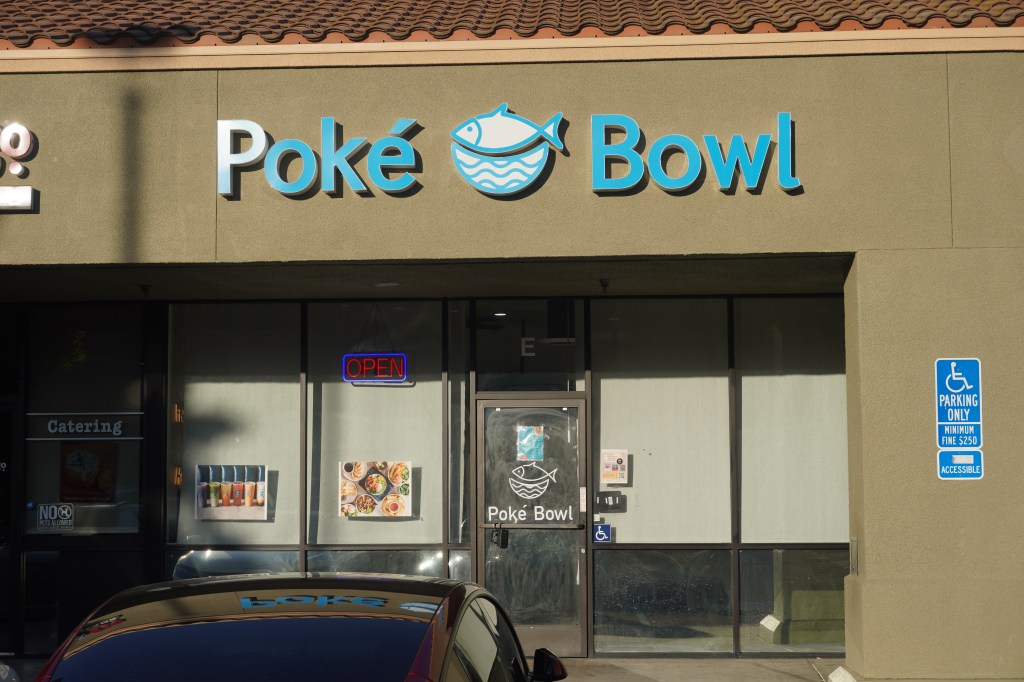
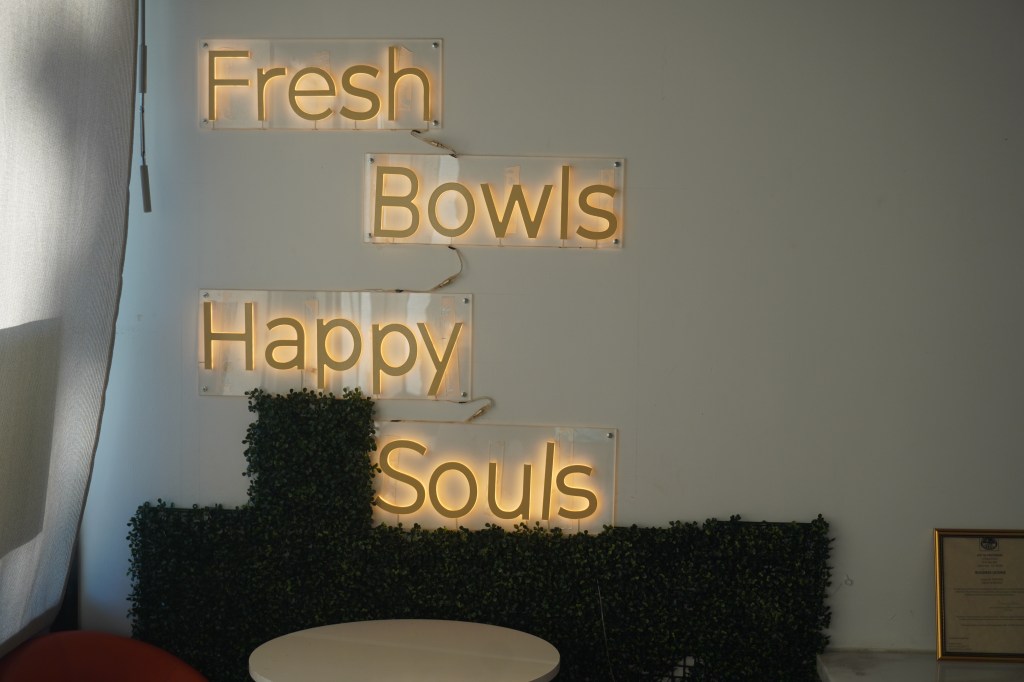
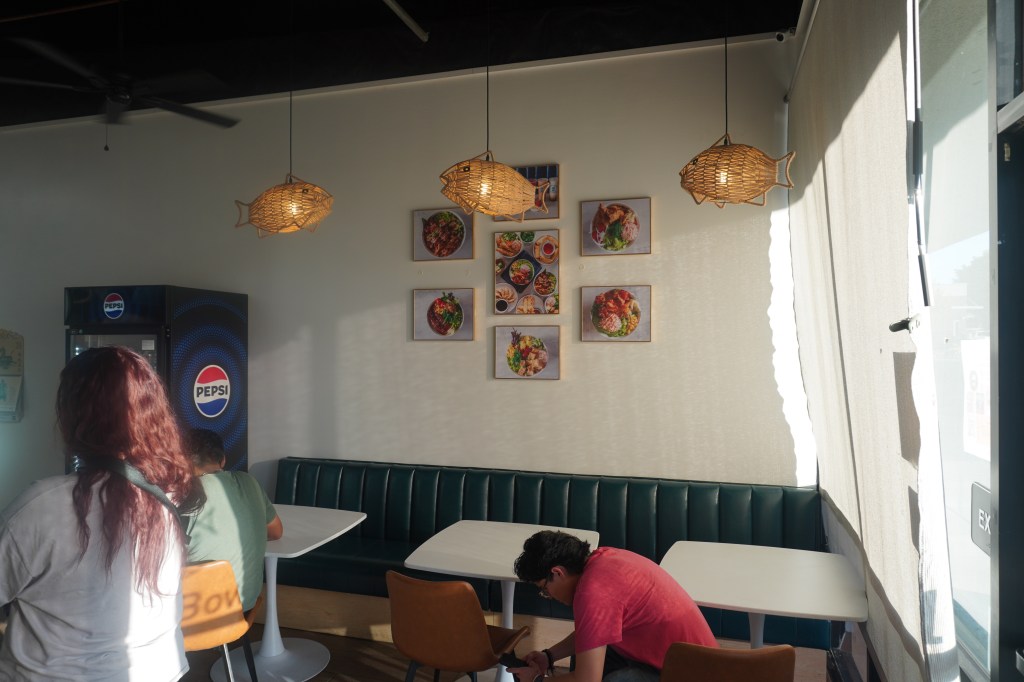
Located in Patterson’s commercial district at 1015 Sperry Avenue, Poke Bowl offers residents a menu centered on Hawaiian-inspired poke bowls, Japanese-inspired side dishes and specialty boba tea beverages. The restaurant is part of a family-owned business that began serving customers in California’s Central Valley in 2016 and has expanded to several locations throughout the region.
Poke is a traditional Hawaiian dish that typically consists of diced fish served with rice and toppings. According to Smithsonian Magazine’s article on Hawaiian food history Hawaiian cuisine reflects a blend of cultural influences that have shaped many of the foods enjoyed throughout the islands today. Over the last decade, poke restaurants have become increasingly popular throughout the United States as consumers seek customizable meals featuring seafood, vegetables and sauces.
At the Patterson location, customers can build their own bowls by selecting a base of rice or salad and adding proteins, vegetables and sauces. Menu offerings include ahi tuna, salmon, shrimp tempura, tofu dishes, grilled eel and other options. The restaurant also serves a variety of milk teas, fruit teas and specialty boba drinks.
The restaurant’s menu reflects a growing demand for customizable dining experiences. Guests can select ingredients according to personal preferences while choosing from a wide range of toppings and flavor combinations. In addition to poke bowls, the restaurant offers side dishes such as Spam musubi, egg rolls and tempura items.
“We serve a mix of food bowls with seasoning,” said Ethan a server. The statement highlights the restaurant’s approach to serving customers in Patterson and surrounding communities.
The restaurant industry continues to play a significant role in California’s economy. According to the National Restaurant Association’s California Restaurant Industry Fact Sheet restaurants support millions of jobs and contribute substantially to the state’s economic activity.
According to the company, fish used in its poke bowls is sourced through trusted suppliers and prepared using sushi-grade ingredients. The business also provides dine-in, takeout and delivery services for customers throughout Patterson and neighboring communities.
As poke cuisine continues to expand beyond Hawaii, restaurants such as Poke Bowl Patterson demonstrate how traditional concepts can be adapted to meet the tastes of local communities while maintaining a focus on fresh ingredients and customizable meals.
Home studio podcast interior. Microphone, laptop and on air lamp on the table, close-up
Artificial intelligence is increasingly changing the way stories are generated, disseminated and experienced across media sectors. The technology is transforming the creative process from independent authors experimenting with AI-assisted writing tools to major film studios using machine learning in visual effects and screenplay analysis, and generating new problems about originality and artistic control.
The rise of generative AI platforms such as OpenAI, Adobe Firefly and Runway has allowed creators to produce scripts, concept art, video sequences and dialogue faster than ever before. Writers are increasingly using AI to brainstorm ideas, overcome writer’s block and develop outlines for novels, podcasts and digital series. In Hollywood and gaming industries, AI tools are being tested to accelerate animation workflows, voice generation and post-production editing.
The study revealed that many people are worried about misinformation, loss of human connection and the propagation of false AI-generated content. Reporting from Semafor on The New York Times’ AI Newsroom, organizations are also figuring out how to ethically employ AI in news and narrative. Reporting from Semafor on The New York Times’ AI newsroom projects detailed how the publication has started to use approved AI technologies into editorial processes to summarise content, make headlines and support research while still maintaining human control.
At the same time, the entertainment industry continues debating the long-term impact of artificial intelligence on creativity. A recent article fromThe Guardian covering AI discussions at the Cannes Film Festival highlighted growing divisions between filmmakers who view AI as an innovative production tool and others who fear it could diminish artistic authenticity.
Still, many creatives consider AI as a tool to work with, not replace human ingenuity, despite these worries. With the evolution of artificial intelligence, storytelling itself could become more immersive, interactive and globally accessible via AI-assisted media production. In the afternoon they decided to head the office to have their lunch.
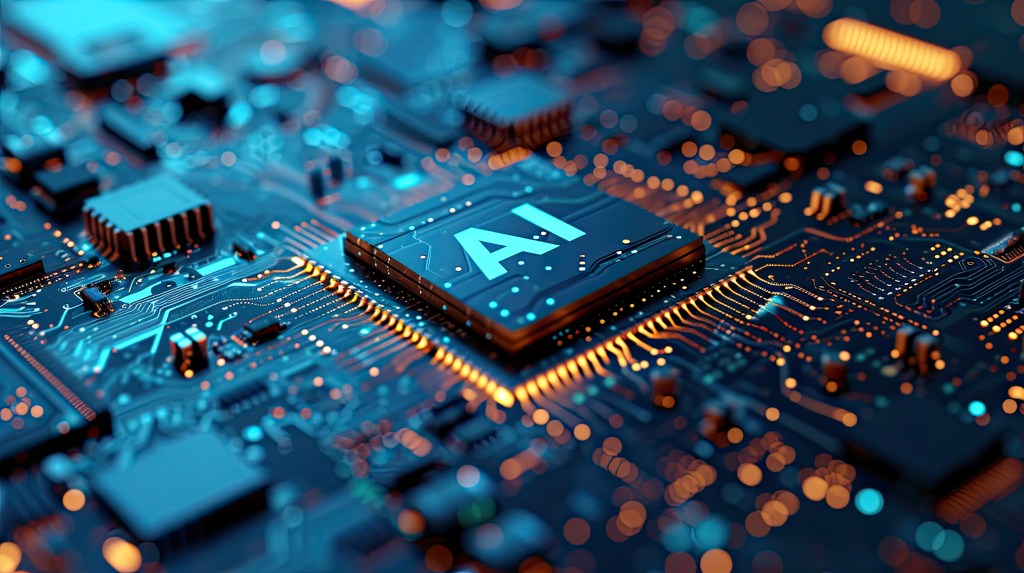
I chose this image because I believe it represented the age of AI and how that is having an influence in how creators are creating content. I selected this particular image because it represented what my message was the best. I learned from this photo story that you must be selected in the kind of image that you choose because it represents the message that you are telling.
# of page views is 0
# of likes, shares, and comments in Instagram is 0
I plan to produce a podcast story about how creators are using artificial intelligence to change media, journalism, podcasting and digital storytelling. The story would focus on writers, student journalists, podcasters, designers and social media creators who now use tools like ChatGPT, Midjourney, Runway, ElevenLabs and Adobe AI features to brainstorm ideas, generate visuals, edit audio, translate stories and speed up production.
This story is newsworthy because AI is no longer a futuristic idea, it is already reshaping creative labor. Pew Research Center reported in 2025 that Americans and AI experts both see artificial intelligence as a major force affecting work, creativity and society, though the public remains more cautious about its risks and benefits than experts. Gallup also reported in 2026 that generative AI is changing how artists work, but early evidence suggests that it is altering creative workflows rather than simply replacing artists.
The issue is especially important in journalism and media. The Reuters Institute’s Digital News Report 2025 found that traditional news organizations are struggling with declining engagement, low trust and changing audience habits, while AI chatbots are beginning to appear as new sources of news discovery. At the same time, Reuters reported that audiences remain suspicious of AI-powered newsrooms, especially when AI is used for sensitive topics. This creates a timely question for my podcast: Can AI help creators tell better stories, or does it threaten originality, trust and human voice?
For the Full Sail Library source, I would search databases such as EBSCOhost, ProQuest, Gale Academic OneFile or Communication & Mass Media Complete using keywords like “generative AI creative work,” “AI journalism,” “AI storytelling,” “AI media production,” and “artificial intelligence and creators.” One useful scholarly angle would be research on AI’s impact on creativity, authorship and media ethics.
For my interview, I would speak with a student creator, journalist, podcaster, photographer or digital storyteller who has used AI in their creative process. I would ask how they use AI, whether it saves time, whether they worry about originality, and how they think audiences should be told when AI is involved.
For audio journalism examples, I would study The American Life’s “My Other Self’’, which explores an AI version of a reporter, and NPR/NPR One’s personalized audio model, which shows how audio platforms use technology to guide listeners toward stories.
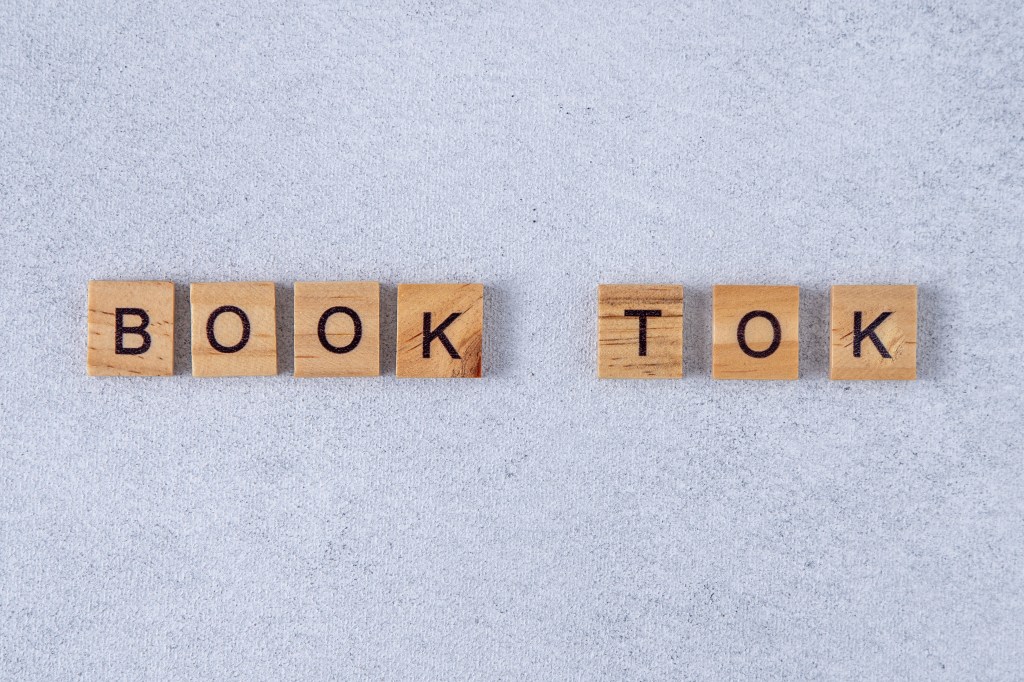
Book tok phrase made of wooden letters. Words booktok
A New Chapter for Reading Culture
For generations, bookstores, libraries and literary critics shaped what readers placed on their shelves. Today, however, a growing number of readers are discovering books not through newspaper reviews or classroom reading lists, but through short videos appearing on their phones.
Platforms such as TikTok, Instagram and YouTube have transformed reading into a highly visible online experience, where emotional reactions, aesthetic book collections and rapid-fire recommendations influence millions of purchasing decisions. At the center of this shift is “BookTok,” a literary community on TikTok where creators discuss novels through dramatic reactions, themed edits and personal reviews.
The trend has altered the publishing industry and revived interest in reading among younger audiences. Publishers, authors and bookstores are increasingly paying attention to viral trends online, recognizing that a single social media post can send a years-old novel back onto bestseller lists within days.
The Rise of BookTok
BookTok emerged during the COVID-19 pandemic, when many users turned to digital communities for entertainment and connection. Readers began posting short videos discussing emotional scenes, favorite characters and book recommendations. The content quickly spread across TikTok’s algorithm-driven platform, reaching audiences far beyond traditional literary circles.
Unlike formal literary criticism, BookTok emphasizes emotional engagement. Videos often feature readers crying over fictional endings, reacting dramatically to plot twists or showcasing heavily annotated books filled with colorful tabs and notes. The approach has made reading feel more personal and accessible to younger audiences.
Genres such as fantasy, romance and young adult fiction have seen significant growth because of the trend. Authors like Colleen Hoover experienced renewed commercial success after their novels gained popularity on TikTok years after publication. Independent bookstores across the United States have even created dedicated “BookTok” sections to highlight trending titles.
Social Media’s Influence on Publishing
The influence of social media now stretches far beyond casual recommendations. Publishing companies increasingly monitor online engagement when planning marketing campaigns, selecting promotional titles and evaluating emerging authors.
Books that generate large online audiences can quickly become publishing sensations. A viral review or aesthetic video montage can drive thousands of readers to purchase the same title almost instantly. Publishers have responded by collaborating directly with influencers, sending advanced copies to creators and designing visually appealing book covers intended to perform well online.
This digital attention has also reshaped how authors connect with readers. Writers now maintain active online presences, sharing behind-the-scenes updates, writing routines and direct responses to fan communities. For many readers, the relationship between author and audience has become more interactive than ever before.
Independent Bookstores Adapt to the Digital Era
Although online trends dominate much of the conversation, physical bookstores remain an important part of reading culture. Many independent shops have embraced social media rather than competing against it.
Bookstores frequently post recommendation videos, aesthetic shelf tours and staff picks across TikTok and Instagram. Some stores organize BookTok-themed displays to attract younger customers looking for trending titles they discovered online.
The combination of digital promotion and in-person browsing has helped some independent bookstores reach audiences they may not have connected with previously. Social media has effectively become a modern extension of word-of-mouth recommendation culture.
Critics Raise Concerns About Literary Trends
Despite its popularity, some critics argue that social media algorithms can narrow literary visibility by repeatedly promoting the same books and genres. Viral trends often favor emotionally intense or visually marketable stories, potentially overshadowing less commercial literary works.
Others worry that reading discussions online may prioritize entertainment value over deeper literary analysis. Short-form content can simplify complex themes into quick reactions designed for engagement and virality.
Still, supporters argue that online literary communities have made reading more inclusive and approachable. Many young readers say BookTok encouraged them to read regularly for the first time in years.
The Future of Reading in a Digital World
As social media continues to evolve, its influence on literature appears unlikely to fade. Digital communities now shape bestseller lists, revive older novels and introduce readers to authors from around the world at unprecedented speed.
What began as readers sharing favorite books online has become a powerful cultural force connecting publishing, entertainment and digital media. While bookstores and libraries remain essential spaces for literary discovery, platforms like BookTok are redefining how modern audiences encounter stories.
For many readers, the path to a new favorite book no longer begins in a bookstore aisle. It begins with a scrolling screen, a viral recommendation and a community eager to share what they are reading next.
The wind in late summer blew quickly across the parched hills, bringing alongside it the smell of ignited heat and something even sharper: smoke that hadn’t yet reached the town but would soon. By the time the first alarms rang out in the valley, the fire had already reached the tops of trees kilometers away, propelled fast by strong winds that firefighters would later say were like a freight train.
Climate Change and Longer Fire Seasons
Scientists say that California’s wildfire seasons have gotten longer and more deadly because of climate change, which is causing droughts to get worse and temperatures to rise. What was once considered a seasonal risk is now a constant threat that is changing life all over the state.
Fires That Spread Within Hours
A recent event showed how quickly these fires can get out of hand. In early 2026, the Springs Fire started in Southern California and burned more than 4,100 acres.
The Destruction of the Palisades Fire
The damage was significantly worse the year before. In January 2025, the Palisades Fire in Los Angeles County tore across neighborhoods, destroying thousands of buildings and forcing more than 100,000 people to evacuate. Strong Santa Ana winds intensified the flames, turning the fire into one of the worst disasters in the city’s history.
Escaping With Only What Matters
For residents, the experience often happens with little warning. An alert on the phone. A knock at the door. A sky turning an unnatural shade of orange. Families gather what they can—important papers, photographs, and pets—before leaving behind homes they spent years building.
Firefighters on the Front Lines
Firefighters on the front lines, led by CAL FIRE, battle through extreme conditions. Crews carve containment lines into rough terrain, endure dangerous heat, and depend on aerial support to slow the spread of flames. Still, modern wildfires often move faster than emergency responders can react.
The Lasting Impact After the Flames
The effects do not end once the fires are extinguished. Survivors face displacement, rebuilding costs, and uncertainty about the future. Smoke drifts across large regions, damaging air quality far beyond the burn zones. Ecosystems are left scarred, with wildlife habitats destroyed and landscapes permanently altered for years.
Communities Rebuilding After Disaster
Even after devastation, communities continue to rebuild. Neighbors support one another, relief efforts begin to take shape, and recovery slowly starts. Yet new fires continue to ignite across California, with hundreds already reported throughout 2026, reminding residents that the threat is far from over.
In 2026, Artificial Intelligence is rapidly reshaping how people work, create, and communicate as powerful new multimodal systems. These expanding regulations push the technology from experimental tools into the core of everyday life and global business.
Across the industry, the most major shift is the rise of multimodal AI—systems which can seamlessly process and generate text, images, audio, and video within a single interface. Companies like OpenAI, Google, and Microsoft have released updated models able to interpret complex inputs—such as analyzing documents, generating visual media, and responding conversationally in real time. These systems are now being embedded directly into productivity tools, search engines, and operating systems.
At the same time, AI is becoming central to business operations. From marketing analysis and automated customer service to document processing and software development, companies are progressively adopting AI copilots to improve workflows. Tools powered by models like ChatGPT and Gemini are now integrated into platforms such as spreadsheets, CRMs, and content management systems, allowing faster decision-making and large-scale content generation.
Governments are also moving quickly to take control of the technology. The European Union is still putting its landmark AI Act into action. It is focusing on being open, classifying risks, and putting limits on systems that are very risky. As AI becomes more common, US federal agencies are paying more attention to how it is used in areas like hiring, healthcare, and national security. This is part of a bigger push for accountability.
Generative video and instant simulation tools are becoming more popular, which is another big change. Using text cues, AI systems can now make videos that look like they came from a movie. This gives journalists, entertainers, and advertisers new options. This has made people more excited and scared, especially about fake news, deepfakes, and their rights to their own ideas.
Tech companies are also competing with each other more and more. Key partnerships, specialized AI chips, and unique data ecosystems are becoming important areas of competition. Cloud computing and specialized hardware are leading the way in the next wave of new ideas. Businesses are spending a lot of money on infrastructure to support models that are getting stronger.
There are still problems, even though things are getting better. A lot of experts still warn about the dangers of bias in AI systems, data privacy, and the environmental cost of training big models. People are more worried about losing their jobs because of these, especially in jobs that require them to do the same digital tasks over and over again, even though new AI-related jobs are still being made.
Going forward, analysts expect AI to become even more embedded in daily life—less visible as a standalone tool and further integrated into the background of digital experiences. As the technology develops, the equilibrium between innovation and regulation will probably shape how far and how fast AI transforms industries worldwide.
Literature has consistently been fascinated with virtue. But modern storytelling is obsessed with its opposite.
The antihero — morally fractured, intellectually conflicted, ethically unstable — has become one of the most enduring figures in narrative art. From Crime and Punishment by Fyodor Dostoevsky to Breaking Bad, created by Vince Gilligan, we witness protagonists who are not aspirational models but psychological case studies.
Why are we drawn to them? And what does their rise say about modern moral consciousness?
The Birth of Moral Fracture
When Rodion Raskolnikov murders a pawnbroker in Crime and Punishment, he does not do so out of rage or necessity alone. He does it to test a theory — that extraordinary individuals hold the right to transgress moral law in pursuit of a higher good.
Raskolnikov represents a 19th-century crisis of rationalism. Enlightenment thinking promised order, logic, and progress. Yet Dostoevsky exposes the terror beneath that promise: what happens when reason detaches from empathy?
The novel becomes less of a crime narrative and more a study in psychological disintegration. Guilt manifests not simply as legal danger but as existential collapse. Raskolnikov’s fever, delirium, and paranoia illustrate that morality is not external law, it is internal architecture.
Walter White and the American Dream Corrupted
More than a century later, Walter White emerges in Breaking Bad not as a philosophical radical but as a humiliated everyman. A brilliant chemist turned underpaid teacher, he embodies late-capitalist resentment.
Walter’s transformation is gradual. He does not declare himself “extraordinary”- he discovers it through power. Similar to Raskolnikov, he rationalizes violence through intellectual justification. He always insists he is providing for his family. He frames each escalation that he is part of as a necessity. Yet the show slowly dismantles that narrative.
By the final season, we see what Dostoevsky understood long ago: the antihero is rarely motivated by justice. He is motivated by ego.
Walter’s famous admission — that he did it “for himself” — echoes Raskolnikov’s realization that his crime was not altruistic but narcissistic.
The Draw of Moral Ambiguity
So why do audiences embrace such characters?
Part of the appeal rests in psychological realism. Traditional heroes operate within moral clarity. Antiheroes expose moral contradiction — something considerably closer to lived human experience.
They dramatize what philosopher Friedrich Nietzsche called the collapse of inherited moral systems. In a world where customary authority (religion, monarchy, fixed social hierarchy) has weakened, the individual becomes the creator of their own values.
But this freedom carries risk.
The antihero is compelling because he asks the forbidden question:
What if I am above the rules?
The story tension does not arise from whether he will break the rules, but from whether he can survive doing so.
Guilt, Punishment, and Modern Justice
There is a key difference between the characters Raskolnikov and Walter White. On one hand, Raskolnikov seeks redemption; his confession and exile suggest that moral restoration is possible, even if it is painful. Walter White’s situation is different; he resists repentance. He does this by continuing his mission. His arc ultimately shows contemporary skepticism toward redemption narratives. The modern antihero does not always return to moral equilibrium. Sometimes he burns everything down.
This shift mirrors cultural change. While the 19th century feared sin; the 21st century fears insignificance.
Raskolnikov kills to prove he is extraordinary.
Walter kills to avoid feeling ordinary.
The Antihero as Cultural Mirror
The endurance of the antihero suggests that literature and television are no longer interested in teaching morality through perfection. Instead, they investigate morality through failure.
The antihero allows the narrative to ask: Is justice internal or social? Is guilt biological or constructed? Does power corrupt- or reveal?
These questions remain urgent because they resist simple answers.
Perhaps that is the antihero’s ultimate function. He destabilizes comfort. He forces us to face the unpleasant fact that morality is not binary — it is negotiated, fragile, and highly personal.
Surveillance isn’t just about cameras on street corners or secret agencies anymore. Today, it’s in your pocket, on your desk, and part of everyday life. It feels polite, personal, and almost invisible.
Most people don’t think of surveillance as control. They see it as convenience.
When Convenience Became the Trade-Off
Smart devices offer convenience: phones that unlock with a glance, apps that track where you’re going, and platforms that remember your preferences before you do. But behind these features is constant data collection like location info, browsing habits, voice recordings, and biometric data.
This data is rarely collected with bad intentions. Usually, it’s used to improve things like better recommendations, faster services, and smoother experiences.
But convenience has quietly replaced consent.
Few people truly understand what they agree to when they tap “accept,” and even fewer have real choices. Being part of digital life often means accepting passive surveillance as the price of entry.
Surveillance Without a Villain
Unlike dystopian stories, modern surveillance isn’t controlled by one authoritarian force. Instead, it’s spread across platforms, devices, advertisers, data brokers, and analytics systems, each collecting pieces that together create a detailed picture of individual behavior.
No one actor sees the whole picture. Yet the picture exists.
This spread-out system makes surveillance harder to challenge. There’s no clear enemy, just systems that are trained to collect data, and discourage restraint.
The Psychological Shift
Maybe the biggest impact of constant monitoring isn’t the technology but the psychology. People change how they act when they know or even just suspect they’re being watched.
Search histories get filtered. Online expression shrinks. Creativity becomes cautious. Even private curiosity feels less private when it leaves a permanent data trail.
Over time, this creates a subtle cycle. Users change to fit the algorithm, and the algorithm changes to predict users better.
Privacy as a Design Choice
Even with widespread surveillance, privacy isn’t dead. It just isn’t the default anymore.
Some platforms are starting to see privacy as a feature, not a problem. They have build systems that keep less data, process information locally, or give users real control over what’s collected.
These choices often require careful design and sometimes mean less profit. This tension highlights a key question today: should technology focus on growth or on human freedom?
What Could Come Next
The future of surveillance may be shaped by choices that are made by developers, lawmakers, and users.
When a setting is changed, a permission denied, and products designed with care shift the balance a little toward personal control.
In a world where watching is easy, choosing not to watch is a moral choice.
There are many books across cultures that could be read thanks to translators. However, some don’t often realize what it takes to translate that book into a good reading experience. Many may describe good translation as fading into the background for a second; it doesn’t call attention to itself, but it shapes every sentence, rhythm, and emotional moment the reader feels. In the world of literature, the act of translation is more than just converting words—it’s a creative act that decides if a story lives, breathes, and connects across cultures.
At its best, translation lets readers experience a work as if it were written just for them, while keeping the original voice and cultural feel intact. This doesn’t mean that the translator’s skill is not there, but it is because of their way of translating that those works become immersive, musical, and lasting.
Translation as Interpretation, Not Substitution
Many people think translation means finding exact word matches. But literature doesn’t work that way. The use of idioms, humor, feelings, cultural references, and rhythm rarely match perfectly between languages. A literal translation might be accurate, but accuracy alone doesn’t make a story engaging.
Good literary translators act as interpreters of voice and meaning. They consider not just what a sentence says, but what that passage could mean or if it has any significance. Their aim is to bring something out of the source passage’s effect instead of copying its exact structure. When done right, the translation feels natural while keeping the author’s unique style.
Reviving a Classic Voice: Don Quixote Reimagined
Canonical literature brings special challenges, especially when the original language is centuries old. Don Quixote, often called one of the greatest novels ever written, had many English translations before Edith Grossman created her highly praised version.
Grossman’s translation brought back the humor, irony, and energy that earlier versions had lost. Instead of keeping old-fashioned English just for a historical feel, she focused on lucidity and voice, making Cervantes feel lively and modern while staying true to his meaning. For today’s readers, this made Don Quixote feel like a fresh, engaging novel rather than a distant classic.
Emotional Loyalty in Russian Literature
Russian literature shows another strong example of translation’s power. Fyodor Dostoevsky’s works are full of psychological tension, deep questions, and strong emotions. But it is because of Constance Garnett’s translation that many readers are able to experience this. Early English readers mostly experienced these novels through Constance Garnett’s translations, which introduced Dostoevsky to the English-speaking world.
Later translators have improved on her work, but Garnett’s translations managed to capture the emotional power of the originals when Russian culture was mostly unknown to Western readers. That generations of readers were deeply moved by these novels shows how translation can carry not just meaning, but feeling.
Translation as an Ethical Obligation
Translating is a transformative art while also carrying an ethical responsibility: to properly introduce the author’s work to a broad amount of audiences. A bad translation can misrepresent cultures, silence voices, and worst of all, lose the author’s intention. A translation that conveys the author’s work while giving it meaning, on the other hand, welcomes readers into another world with respect and subtlety. As literature becomes more global, translators serve as cultural guardians, ensuring stories retain their soul as they travel.
For readers, this means that good translation affects how much they connect, understand, and feel the story. A skilled translator helps readers forget the language barrier entirely, letting them get lost in the story rather than being distracted by awkward wording or off-tone.
Why Translation Matters More Than Ever
As literature grows more global, translation is no longer just a side issue—it’s key to the reading experience. The best translated works show us that language isn’t a barrier but a doorway. When crossed carefully, it opens readers to new histories, ideas, and feelings.
Great translations don’t call attention to themselves. They quietly guide the reader smoothly from one language to another. When done well, they make sure stories—no matter where they come from—feel deeply and clearly human.
Every cinematic cutscene or memorable line of dialogue comes from a well-organized, team-driven process that supports big productions. Narrative content in AAA games goes through many steps, each needing clear communication, flexibility, and ongoing revisions.
The process usually starts with broad story foundations like themes, tone, world rules, and main character arcs. These are often recorded in narrative bibles or story summaries that the whole team can refer to. At this point, narrative designers focus more on making sure everything fits together than on fine details, making sure the story supports the gameplay.
As production picks up, writers start making modular narrative pieces like character bios, dialogue lines, in-game descriptions, lore entries, and mission outlines. Each piece needs to work on its own but also fit into the bigger story. This modular method helps teams make changes quickly without messing up the overall narrative.
Collaboration is key during this phase. Writers join writer’s rooms and ideation sessions, working closely with designers, producers, and other narrative team members. Feedback is ongoing, and revisions are part of the process. Narrative designers need to be flexible, adjusting their work as gameplay changes, technical limits, or creative goals evolve.
With this, documentation becomes really important as teams grow. There are tools like Confluence and custom writing systems help track changes, organize references, and keep the story consistent. Good documentation helps new team members get up to speed fast and stops the story from drifting during long development periods.
When assets are added into the game engine, writers often check how the content works in context—like how dialogue sounds during gameplay or how text fits in the user interface. They make changes to improve readability, pacing, and emotional effect. This back-and-forth process keeps going until late in production.
What makes AAA narrative work special is how it balances creativity with structure. Many writers tell a variety amount of stories, but they also work closely with others inside complex systems. A game’s narrative succeeds not because of one person, but because everyone shares a commitment to clarity, consistency, and the player’s experience.











 Inside Literature's Finest